
A business can have a professional website, polished social media content, and well-designed campaigns, but the message still needs to make one thing obvious: what the company offers and why it matters.
A focused marketing message strategy helps communicate the business in a way customers can quickly understand. Strong brand messaging explains what the company provides, who it serves, and how its services connect to real customer needs without relying on unnecessary complexity.
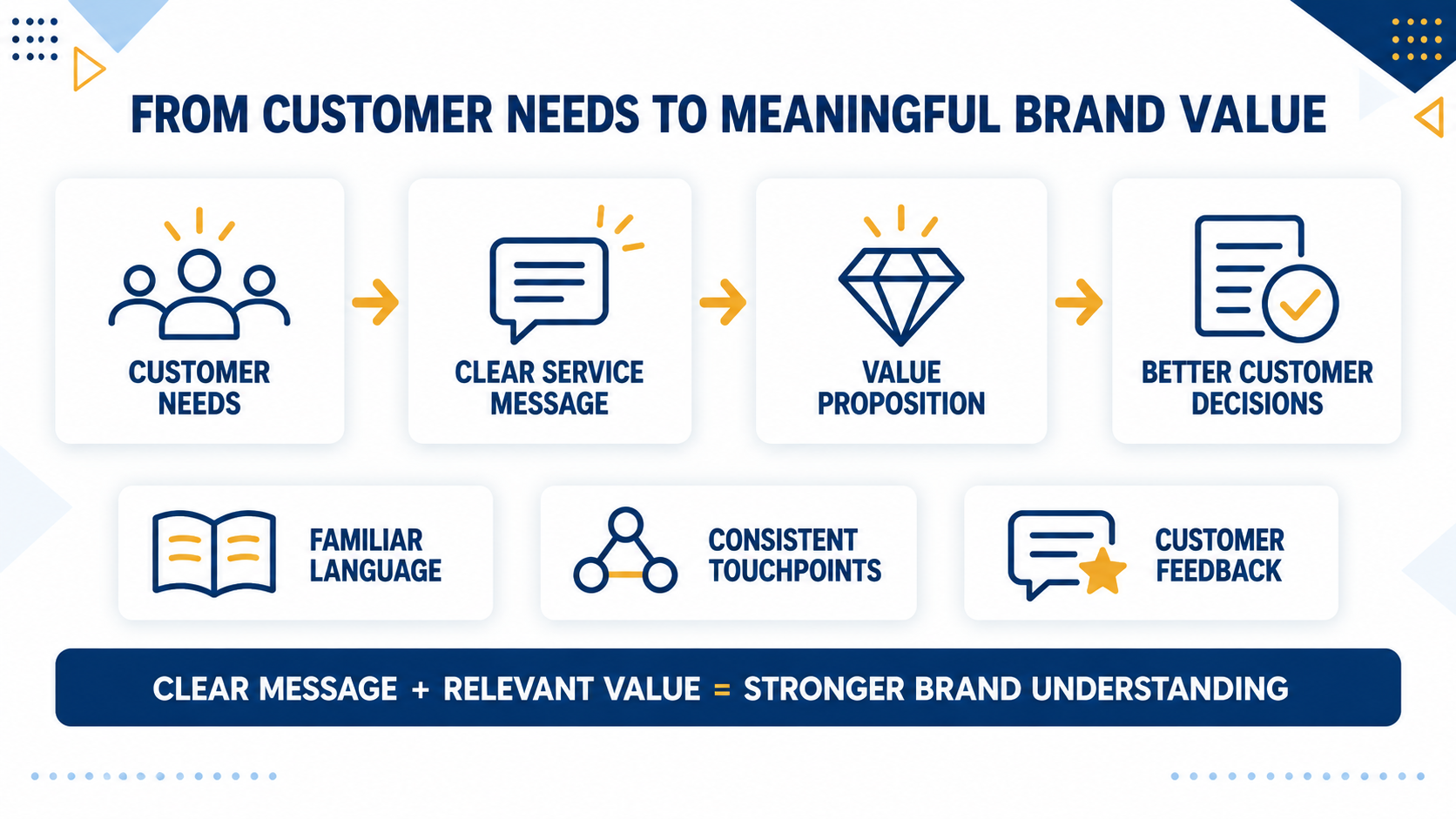
Customer Needs Give the Message Direction
Businesses naturally know the details of their services, processes, and capabilities. Those details are important, but they are most useful when connected to what customers are actually trying to achieve.
Effective marketing communication starts with customer needs and shows how the company can respond to them. This makes the message more relevant because it connects the service with a practical reason for customers to pay attention.
Value Goes Beyond a List of Services
Service lists explain what a business offers, but they do not always explain why one provider may be more relevant than another.
A strong value proposition connects the service to a meaningful outcome. This may include improving visibility, simplifying a process, reaching the right audience, saving time, or creating better business opportunities. The more specific the value is, the easier it becomes for customers to understand why the service matters.
Familiar Language Makes Expertise Easier to Follow
Professional communication does not need to sound complicated. Industry terms can be useful when they are necessary, but too much technical language can make the message harder to understand.
Effective brand messaging uses language that fits the audience. The objective is to communicate expertise in a way that remains professional while making the business easier to understand across different customer groups.
Consistent Messaging Creates Better Brand Recognition
Businesses communicate through websites, social media, advertisements, presentations, proposals, email, and other customer touchpoints. The exact wording can change depending on the platform, but the core message should remain recognizable.
A well-developed marketing message strategy gives these channels a shared direction. When customers encounter the business in different places, they receive a consistent explanation of what the company represents and what it can provide.
Customer Responses Can Improve the Message
Audience reactions can provide useful insight into whether marketing communication is working as intended. Questions, inquiries, sales conversations, and feedback can reveal which parts of the message are understood and which areas may need more explanation.
Reviewing these patterns helps businesses refine marketing communication based on real customer interactions. This creates an opportunity to improve service descriptions, website content, campaigns, and other materials over time.
ANT Connects Messaging With the Wider Brand Strategy
At Archipelago Network Technology Inc. (ANT), marketing messages can be developed around the business, its audience, its services, and the needs those services are designed to address.
Archipelago Network Technology Inc. (ANT) can connect brand messaging, the company’s value proposition, content, design, and digital marketing to create a more consistent and understandable brand presence. This helps customers recognize what the business offers and why it may be relevant to them.
Better Understanding Supports Better Customer Decisions
Customers can evaluate a business more easily when its message is straightforward, relevant, and consistent. Marketing becomes more useful when people can quickly understand the services, the value behind them, and the type of needs the company can address.
A focused marketing message strategy brings these elements together. By connecting customer needs, value, and consistent brand messaging, businesses can communicate their strengths more effectively and create a stronger foundation for customer interest and engagement.