
A website may contain strong content, useful services, and valuable information, but if everything is difficult to find, the overall digital experience can suffer. Visitors need a clear path through the site, and search engines need a logical structure that helps them understand how pages relate to one another.
A strong website content architecture organizes information around user needs, business priorities, and search visibility. It gives every important page a clear place within the website and helps digital campaigns send visitors to the most relevant destination.
Website Structure Should Reflect What Visitors Need
A website should be organized around the information people are most likely to look for.
Important services, products, company information, resources, and contact options should be easy to locate without requiring visitors to search through multiple unrelated pages.
A thoughtful website content structure reduces unnecessary complexity and makes the browsing experience more intuitive.
Main Pages Need a Clear Role
Every important page should serve a specific purpose.
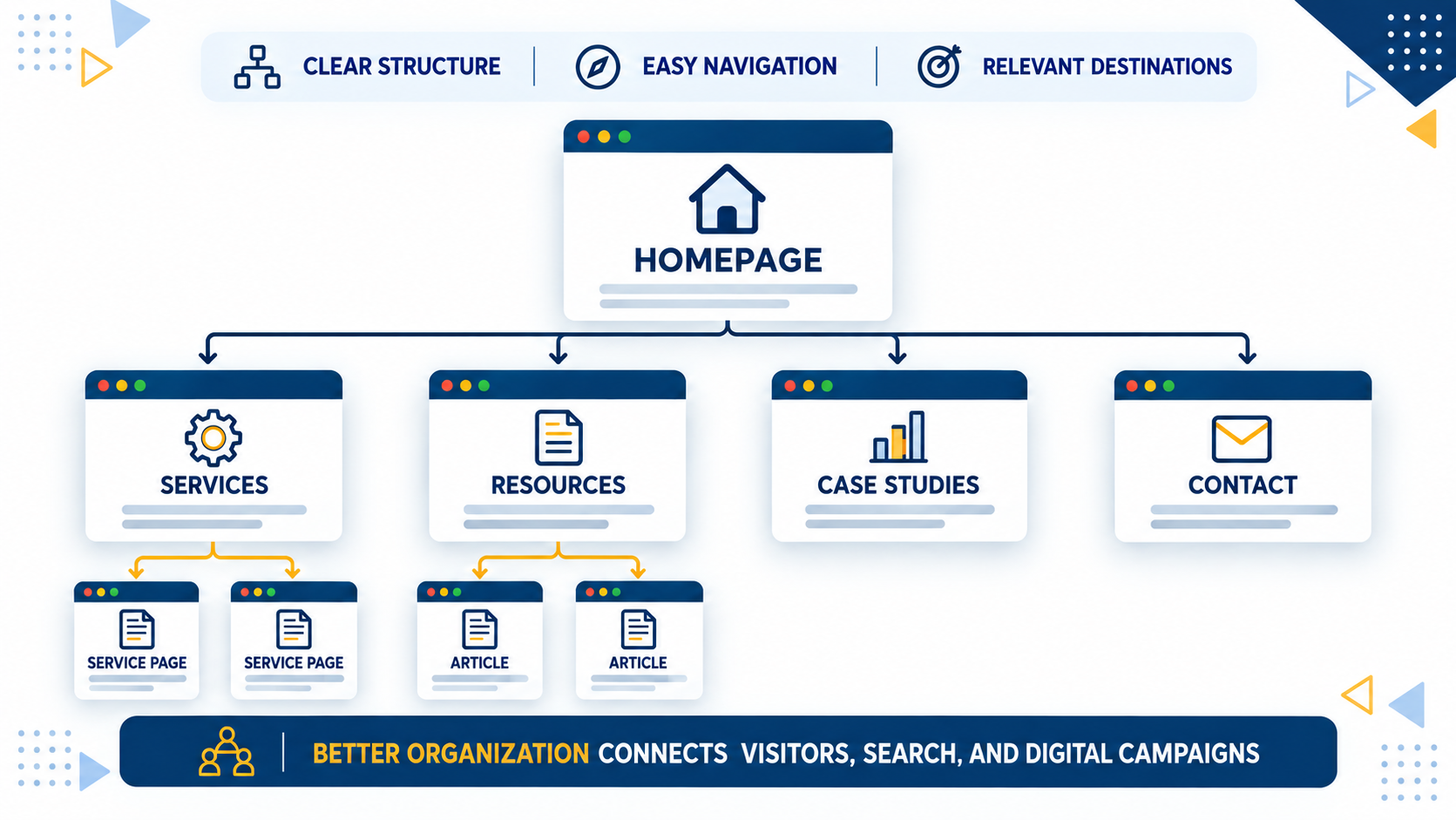
The homepage may introduce the company and guide visitors toward key areas. Service pages can explain individual solutions. Articles can answer specific questions, while landing pages can support particular campaigns.
Defining these roles makes website content architecture easier to manage and prevents multiple pages from trying to perform the same function.
Navigation Should Support Important Journeys
Menus are not only design elements. They influence how people move through the website.
A clear website navigation strategy can guide visitors toward services, resources, case studies, contact options, or other important pages without overwhelming them with unnecessary choices.
Navigation should reflect priority information while keeping the overall structure simple enough to understand quickly.
Content Hierarchy Helps Visitors Scan Information
The organization inside individual pages matters as much as the structure of the website itself.
Headings, supporting sections, visual breaks, calls to action, and related links can help people understand where they are and what information comes next.
A strong digital content hierarchy makes longer pages easier to scan while giving important information greater visibility.
Internal Links Connect Related Information
Internal linking helps visitors continue exploring relevant content.
A service page might link to related case studies, articles, FAQs, or supporting services. An article can direct readers toward a service page that provides the next logical step.
This strengthens the website content structure while helping search engines understand relationships between different pages.
Good Architecture Can Support SEO
Website organization can influence how efficiently search engines discover and understand content.
Important pages should not be buried several levels deep or isolated from the rest of the site. Logical page relationships and internal links can make important topics easier to identify.
For this reason, SEO website structure should be considered alongside content planning rather than treated as a separate technical task.
Digital Campaigns Need the Right Destination
Paid ads, social media posts, email campaigns, and search traffic should lead visitors to pages that match the message that brought them there.
A campaign promoting a particular service should not automatically send every visitor to the homepage. A clear website architecture makes it easier to direct traffic toward relevant pages.
This creates a more connected experience between acquisition channels and the website.
Website Structure Should Evolve With the Business
As businesses introduce new services, publish more content, or enter new markets, websites naturally become larger.
Without regular review, navigation and page organization can become difficult to manage. New pages may be added without considering how they fit into the existing structure.
Reviewing website content architecture over time helps keep the site organized as digital activity expands.
ANT Connects Website Structure With Digital Performance
At Archipelago Network Technology Inc. (ANT), website planning can connect SEO, content marketing, user experience, lead generation, and campaign performance.
Archipelago Network Technology Inc. (ANT) can support businesses through content architecture planning, page hierarchy, website navigation strategy, internal linking, service-page organization, and digital performance review.
This gives the website a clearer role as the central destination for different digital marketing activities.
Better Organization Creates a Stronger Digital Foundation
A website does more than display information. It connects search traffic, paid campaigns, social media, content, and lead-generation activity in one digital environment.
A well-planned website content architecture helps those different elements work together. When pages are organized logically, visitors can find information more easily, campaigns have stronger destinations, and search engines receive clearer signals about the structure of the site.