
Marketing does not need to remain fixed to be consistent. Customer habits change, platforms evolve, competitors adjust their approach, and business priorities develop over time. These changes can influence which channels, messages, and campaigns deserve the most attention.
An effective adaptive marketing strategy helps businesses respond to these shifts while keeping their overall direction intact. The purpose is not to follow every new trend, but to make thoughtful adjustments when customer needs, performance results, or business goals indicate that a different approach may be more useful.
Customer Behavior Can Shape Marketing Priorities
Customers now move across multiple touchpoints before making a decision. They may search online, check social media, read reviews, compare providers, watch videos, or return to a website several times before contacting a business.
Changes in customer behavior can influence where companies need to be visible and what information should be available at each stage. Reviewing these habits helps businesses keep their marketing strategy aligned with the way customers actually research and evaluate their options.
Trends Are Most Useful When They Match the Business
New platforms, content formats, tools, and campaign ideas regularly create new marketing possibilities. Some may be worth exploring, while others may have little connection to the audience or objectives of the company.
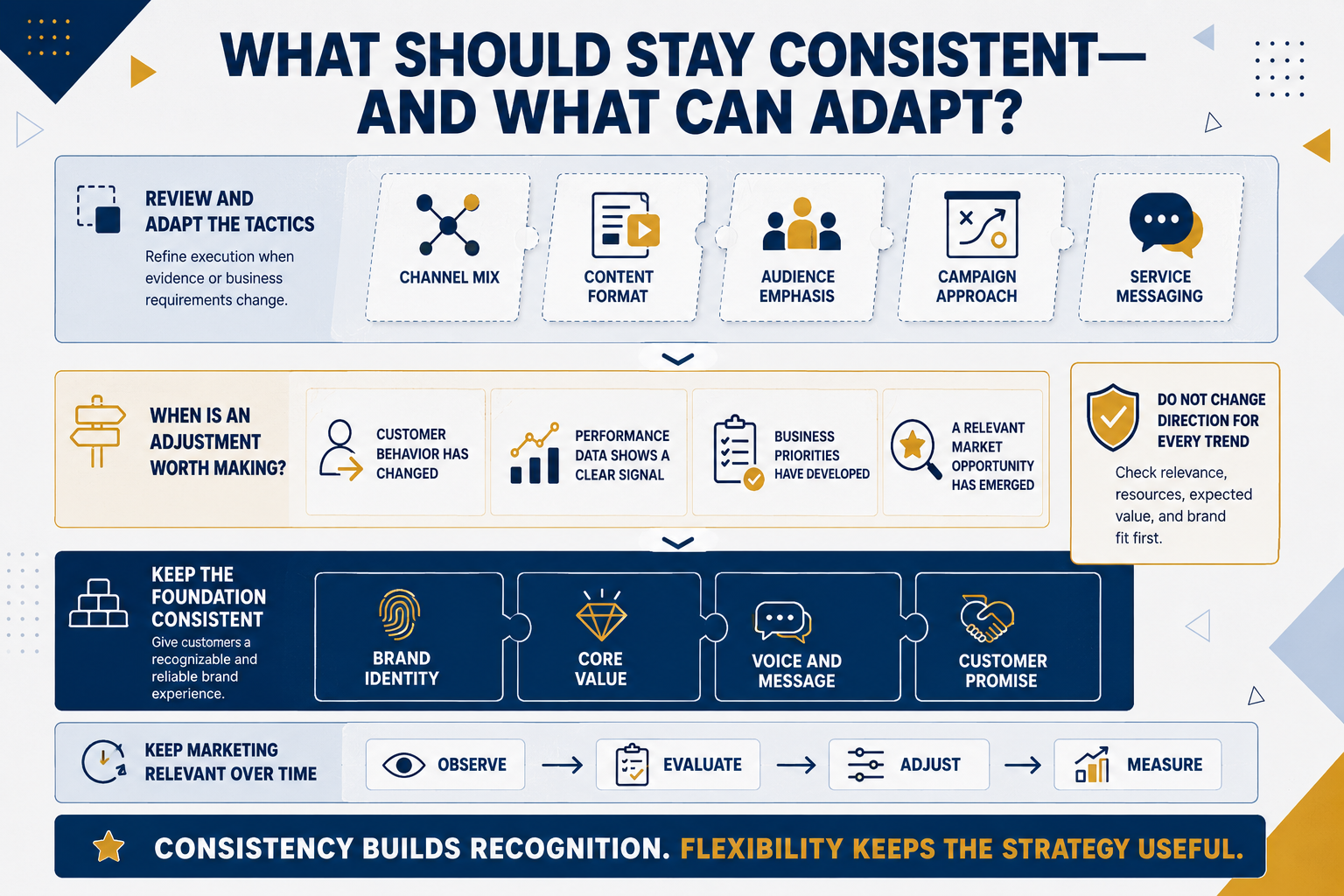
Instead of adopting every new idea, businesses can evaluate marketing trends based on relevance, available resources, customer behavior, and expected value. This keeps marketing focused on opportunities that have a practical role within the wider strategy.
Performance Data Provides Direction for Adjustments
Marketing decisions become more informed when they are supported by actual results. Website activity, search performance, campaign engagement, inquiries, conversions, and sales feedback can all provide useful signals.
Reviewing marketing data over time can show where customer interest is growing, which campaigns are producing relevant responses, and where performance may be changing. These insights help businesses decide which activities deserve more investment and which areas may benefit from a different approach.
Brand Consistency Can Remain While Tactics Evolve
Adapting marketing does not require a company to regularly change its identity. The brand, core message, and values can remain recognizable even as individual campaigns and channels develop.
A practical adaptive marketing strategy separates long-term brand foundations from the marketing tactics that can be refined. Businesses can explore different content formats, audiences, platforms, and campaign approaches while maintaining a consistent identity across customer touchpoints.
Business Growth Can Create New Marketing Requirements
Marketing should also reflect changes happening within the company. New services, expansion into different markets, revised priorities, or changes in the target audience can all create new communication needs.
The marketing strategy becomes more useful when it reflects the current direction of the business. Updating service messaging, campaigns, content, and digital channels helps customers understand what the company offers today and where it is heading.
ANT Helps Marketing Evolve With Business Goals
At Archipelago Network Technology Inc. (ANT), marketing direction can be reviewed using business objectives, customer behavior, campaign performance, competitor activity, and relevant marketing data.
Archipelago Network Technology Inc. (ANT) can connect these insights with branding, content, SEO, digital marketing, campaigns, and performance tracking. This helps businesses identify where adjustments can strengthen results while maintaining a consistent overall brand direction.
Relevant Marketing Creates More Sustainable Progress
Consistency gives customers something familiar to recognize, while flexibility allows marketing to respond to changing needs and opportunities. Both are important for maintaining a useful long-term strategy.
An adaptive marketing strategy brings these two ideas together. By reviewing performance, customer behavior, business priorities, and market developments, companies can keep their marketing relevant without changing direction unnecessarily.