
Meta Ads can reach large audiences across Facebook and Instagram, but broad reach alone does not guarantee useful results. Campaign performance depends heavily on whether the ads are being shown to people who are relevant to the offer.
A focused Meta Ads audience targeting strategy helps businesses build campaigns around the people most likely to engage, inquire, or convert. By using audience data, campaign objectives, and performance insights together, advertising can become more efficient and better aligned with business goals.
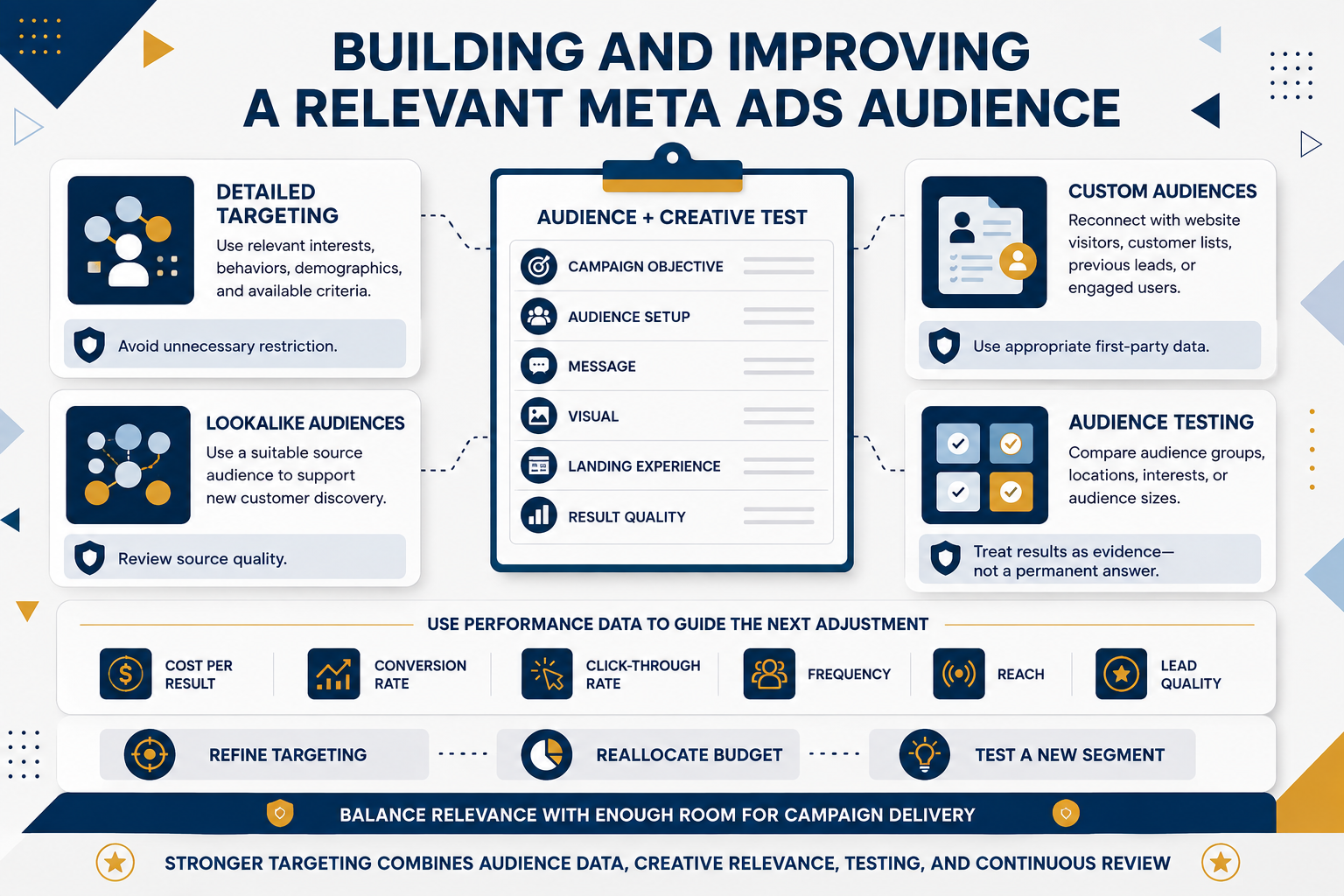
Audience Targeting Starts With the Campaign Goal
Different campaigns need different audiences.
A campaign designed for awareness may target a broader group, while a lead-generation campaign may require more specific criteria. Product promotions, website traffic campaigns, and remarketing campaigns may also need separate audience structures.
A clear Facebook Ads targeting strategy begins by defining what the campaign is expected to achieve before selecting who should see it.
Detailed Targeting Can Narrow the Audience
Meta allows advertisers to build audiences using interests, demographics, behaviors, and other available targeting options.
These filters can help businesses focus on people who are more likely to have an interest in a particular product, service, or industry.
However, overly narrow targeting can also limit campaign delivery. A balanced Meta Ads targeting strategy should provide enough direction without restricting the campaign unnecessarily.
First-Party Data Can Create More Relevant Audiences
Businesses can also use their own customer or lead data to support advertising.
Website visitors, customer lists, previous leads, and people who have interacted with digital content may provide useful audience signals. These audiences can help businesses reconnect with people who already have some familiarity with the company.
Using custom audiences on Meta can make campaigns more relevant because targeting is based on previous digital interactions rather than only broad interests.
Lookalike Audiences Can Support New Customer Discovery
Existing customer data can also help businesses identify new audiences.
Meta can use selected source audiences to find people who share similar characteristics or behaviors. These are commonly known as lookalike audiences.
A structured lookalike audience strategy can help expand campaign reach while still using existing customer or lead data as a reference point.
Audience Testing Can Reveal Better Opportunities
One audience setup should not automatically be treated as the final answer.
Businesses can test different audience groups to understand which ones generate stronger engagement, lower costs, or more valuable conversions. These tests may compare interests, customer segments, geographic areas, or audience sizes.
Regular testing gives a Meta Ads audience targeting strategy more flexibility and allows campaign decisions to be based on actual performance.
Creative and Audience Should Work Together
Even a well-defined audience can respond poorly if the advertisement does not feel relevant.
Different groups may react to different benefits, formats, visuals, or calls to action. Matching creative direction with audience needs can improve the overall campaign experience.
This is why Facebook Ads targeting and creative development should be planned together rather than as separate activities.
Performance Data Should Guide Audience Adjustments
Audience performance can change over time.
Cost per result, conversion rate, click-through rate, frequency, reach, and lead quality can help businesses understand which audience groups are delivering stronger outcomes.
Reviewing these metrics allows campaigns to refine targeting, reallocate budget, or test new segments instead of relying on the same setup indefinitely.
ANT Connects Audience Targeting With Campaign Performance
At Archipelago Network Technology Inc. (ANT), Meta advertising can be connected with audience research, creative development, landing pages, lead generation, conversion tracking, and performance reporting.
Archipelago Network Technology Inc. (ANT) can support businesses through audience planning, custom audiences on Meta, lookalike audience development, campaign setup, creative testing, and ongoing optimization.
This creates a more coordinated approach to paid social advertising and helps ensure campaign targeting supports measurable digital objectives.
Relevance Can Make Paid Social More Efficient
Meta Ads work best when the campaign reaches people who have a reasonable connection to the offer.
A structured Meta Ads audience targeting strategy can help businesses move beyond broad advertising by combining audience data, testing, creative relevance, and performance measurement.
When targeting decisions are continuously reviewed and improved, paid social campaigns can become more focused, efficient, and valuable over time.