
Keyword research can reveal what potential customers are searching for, but finding keywords is only part of the SEO process. Those keywords also need to be organized across the website so that each important search topic has a clear destination.
A structured keyword mapping strategy connects target keywords with the most relevant website pages. This helps businesses create a more organized SEO structure, reduce unnecessary competition between their own pages, and identify where new content may be needed.
Keyword Research Is the Starting Point
Before keywords can be assigned to pages, businesses need to understand which searches are relevant to their products, services, audiences, and goals.
Search volume, competition, search intent, relevance, and business value can all influence keyword selection. The objective is not simply to collect the largest possible list.
Effective SEO keyword research creates a focused pool of terms that can later be organized according to specific website pages and content opportunities.
Each Important Keyword Needs a Logical Destination
Once relevant keywords are identified, they can be matched with existing pages.
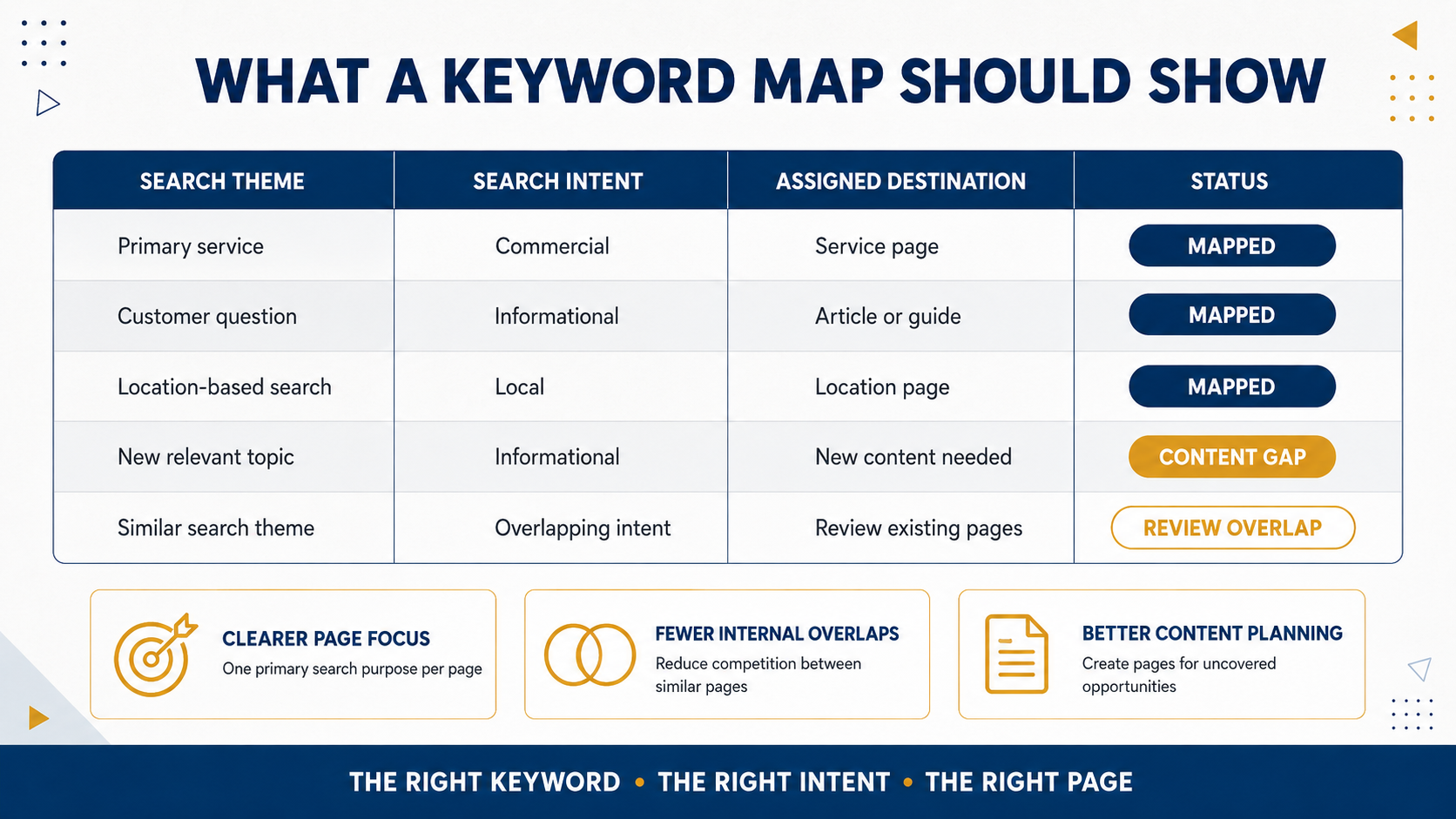
A primary service keyword may belong on a dedicated service page, while informational searches may be better addressed through articles, guides, FAQs, or resource pages.
A clear keyword mapping strategy helps ensure that search terms are connected with pages capable of answering the user’s search appropriately.
One Page Should Have a Clear Primary Focus
Trying to make one webpage rank for several unrelated services or topics can weaken its overall direction.
Keyword mapping helps establish a main search theme for each important page while allowing closely related supporting terms to appear naturally within the content.
This makes website keyword optimization more organized and gives search engines clearer signals about the purpose of individual pages.
Mapping Can Reveal Missing Content
Sometimes keyword research identifies valuable searches that do not have an appropriate page on the existing website.
These gaps can become opportunities for new service pages, articles, comparison content, FAQs, guides, or landing pages.
A keyword content map makes these opportunities easier to identify because the business can see which search topics already have coverage and which still need dedicated content.
Keyword Mapping Can Prevent Pages From Competing With Each Other
Websites sometimes publish several pages targeting nearly identical keywords.
When multiple pages compete for the same search intent, search engines may have difficulty determining which one should appear in results. This is often referred to as keyword cannibalization.
A structured keyword mapping strategy can reduce this issue by giving important pages clearly defined keyword targets and identifying overlapping content that may need to be consolidated or repositioned.
Mapping Helps Connect SEO With Content Planning
Keyword mapping is also useful when developing an ongoing content calendar.
Instead of selecting article topics randomly, businesses can create content around search themes that support important products, services, and website sections.
This allows SEO content planning to contribute to a larger search structure rather than producing isolated articles with little connection to the rest of the website.
Performance Data Can Improve the Map Over Time
A keyword map does not have to remain unchanged.
Search rankings, impressions, clicks, conversions, and emerging keyword opportunities can reveal where adjustments are needed. Some pages may begin ranking for unexpected terms, while others may require stronger optimization.
Reviewing this information allows website keyword optimization to evolve based on actual search performance.
ANT Organizes Keywords Around Digital Business Goals
At Archipelago Network Technology Inc. (ANT), keyword research can be connected with website structure, SEO content development, service-page optimization, and performance monitoring.
Archipelago Network Technology Inc. (ANT) can support businesses through SEO keyword research, keyword categorization, page mapping, competitor keyword analysis, content-gap identification, and ongoing optimization.
This gives businesses a more organized approach to search visibility instead of treating keywords as a disconnected list.
A Keyword Map Gives SEO a Clearer Direction
SEO becomes easier to manage when every important search topic has a purpose and destination.
A well-developed keyword mapping strategy helps businesses understand which pages should target which searches, where new content is needed, and where existing pages may overlap.
With keywords organized around website structure and business objectives, SEO efforts can become more focused, measurable, and easier to expand over time.