
A website can contain useful information and still struggle to appear prominently in search results. Search engines need enough context to understand what each page is about, while visitors need content that is organized, relevant, and easy to navigate.
This is where on-page SEO becomes important. By improving the content and elements within individual website pages, businesses can strengthen search relevance while creating a better experience for people arriving from Google and other search engines.
Every Page Needs a Defined Search Purpose
A website page should have a clear reason for appearing in search.
A service page may target people looking for a particular solution, while an article may answer a specific question. Understanding that purpose helps determine the appropriate primary keyword, supporting terms, headings, and content structure.
A focused on-page SEO strategy connects the page with the searches it is intended to serve instead of attempting to rank one page for too many unrelated topics.
Page Titles Give Search Engines an Important Signal
The page title is one of the elements search engines use to understand the subject of a webpage.
A useful title should accurately describe the content while naturally including the primary topic or keyword. It should also make sense to people viewing the page in search results.
Effective SEO title optimization balances search relevance with readability instead of simply inserting as many keywords as possible.
Headings Create Structure Around the Topic
Headings help divide information into sections and make longer pages easier to scan.
They can also provide additional context about the subjects covered within the page. A logical heading structure allows the main topic to be supported by related questions, benefits, features, or explanations.
This makes SEO content optimization valuable for both search engines and website visitors.
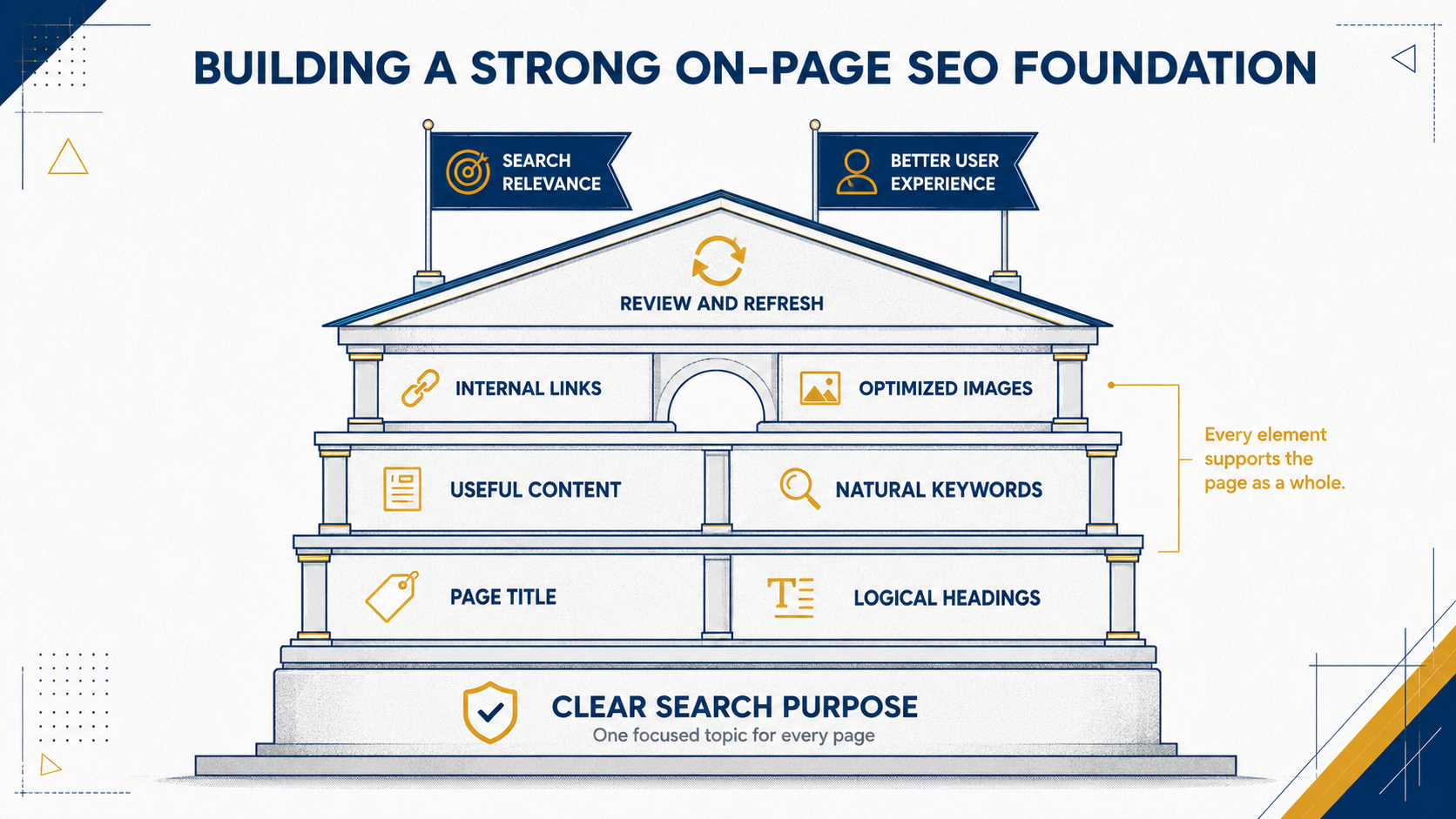
Keywords Should Fit Naturally Into Useful Content
Keyword placement remains important, but repetition alone does not create strong SEO content.
Primary and supporting keywords can appear naturally within titles, headings, introductions, body content, image descriptions, and other relevant page elements. The surrounding information should still provide genuine value to the reader.
A strong on-page SEO strategy focuses on relevance and context rather than keyword quantity.
Internal Links Help Connect Related Pages
Website pages should not operate as completely separate pieces of content.
Internal links can connect articles with service pages, related resources, case studies, or other useful information. This helps visitors continue exploring while giving search engines additional context about the relationship between pages.
A thoughtful internal linking strategy can also help important pages receive greater visibility throughout the website.
Images Can Contribute to Page Optimization
Images support website content visually, but they can also be optimized for search and performance.
Descriptive file names, relevant alternative text, appropriate dimensions, and compressed file sizes can make images more useful without unnecessarily slowing the page.
These smaller elements form part of broader SEO content optimization and can contribute to a more complete on-page approach.
On-Page Performance Needs Regular Review
SEO work does not necessarily end when a page is published.
Search behavior, competition, company services, and website content can change over time. Existing pages may need updated information, improved headings, additional internal links, refreshed keywords, or stronger calls to action.
Regular review allows on-page SEO to continue developing alongside the website instead of becoming a one-time task.
ANT Connects On-Page SEO With the Wider Digital Strategy
At Archipelago Network Technology Inc. (ANT), website optimization can work together with keyword research, content marketing, technical SEO, lead generation, and performance analytics.
Archipelago Network Technology Inc. (ANT) can support businesses through keyword mapping, SEO title optimization, content structure, metadata development, internal linking, page optimization, and ongoing performance monitoring.
This gives individual website pages a clearer role within the wider digital marketing strategy.
Better Pages Create a Stronger Search Foundation
Search visibility is influenced by many factors, but the quality and structure of individual pages remain an important part of SEO.
A focused on-page SEO strategy helps businesses organize their website around relevant searches while improving the information visitors receive after they arrive. When keywords, content, headings, links, and page elements work together, each page has a stronger foundation for contributing to long-term organic visibility.