
Publishing new content is important, but older website pages and articles can also continue contributing to search visibility when they are reviewed and improved over time. Some may already have rankings, backlinks, or traffic that make them valuable assets worth updating instead of replacing.
A focused content refresh strategy helps businesses improve existing pages so they remain accurate, useful, and competitive in search. This can strengthen SEO performance while making better use of content that has already been created.
Existing Content May Already Have Search Value
Older articles and pages often contain useful ranking history.
Even if performance has slowed, these pages may still appear for relevant keywords, generate impressions, or attract occasional traffic. Starting from an existing page can sometimes be more efficient than creating a completely new one.
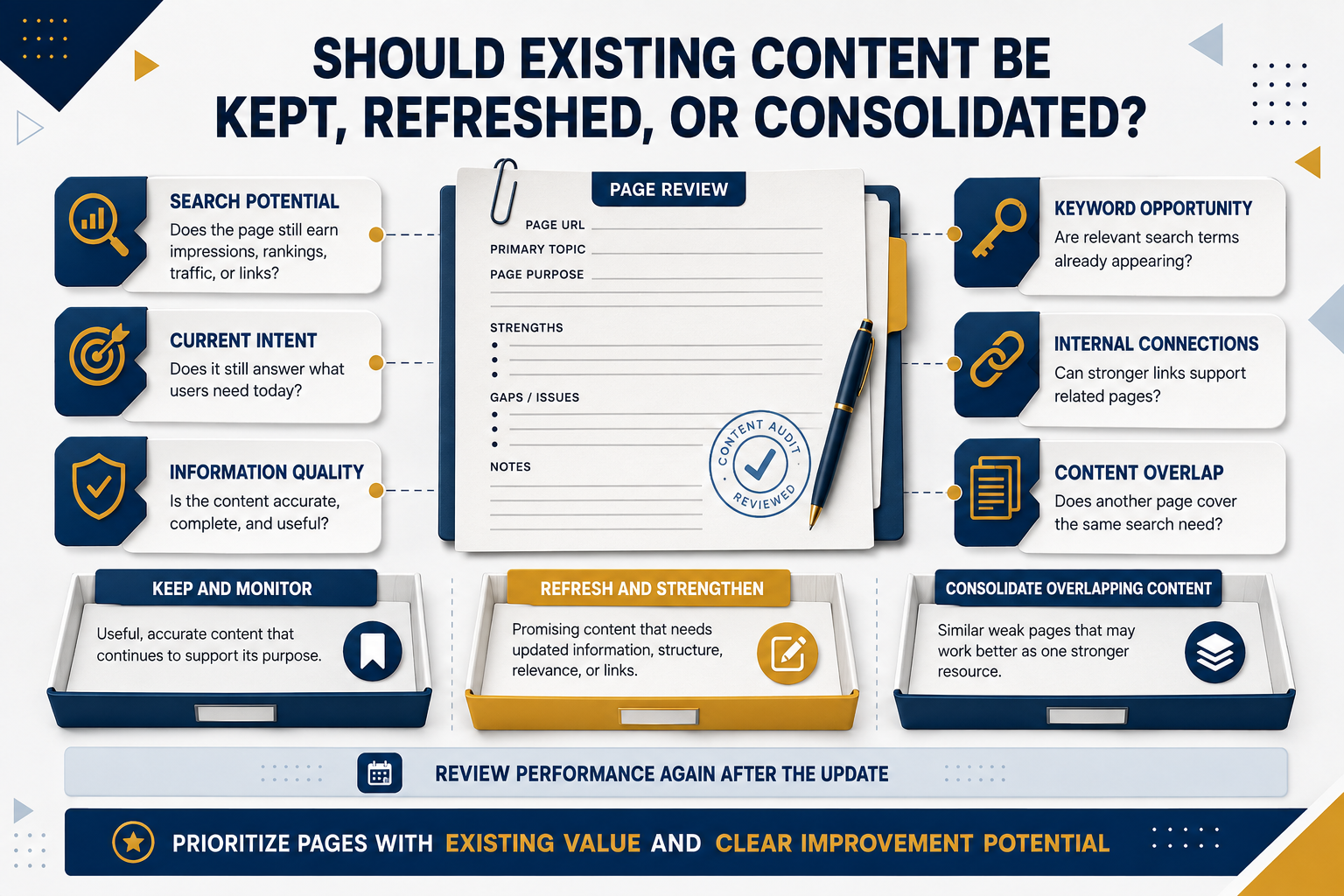
A structured SEO content refresh begins by identifying which existing pages still have potential.
Performance Data Can Show Which Pages Need Attention
Not every old page needs to be updated.
Search impressions, rankings, clicks, traffic trends, engagement, and conversions can help identify which content deserves priority. A page that once performed well but has gradually declined may be a strong candidate for improvement.
Reviewing this data allows a content refresh strategy to focus on pages where updates are most likely to create meaningful value.
Search Intent Can Change Over Time
The way people search for information can evolve.
New questions may appear, terminology may change, and competitors may publish more complete resources. A page that matched search intent two years ago may no longer fully answer what users are looking for today.
Refreshing the content around current SEO search intent can make the page more relevant without abandoning its original purpose.
Information Should Stay Accurate and Useful
Outdated statistics, broken links, old product information, or incomplete explanations can reduce the usefulness of a page.
An SEO content update may involve revising facts, adding new examples, improving explanations, updating links, strengthening headings, or removing information that is no longer relevant.
The goal is not to change content simply because it is old. The goal is to make it genuinely more useful.
Keywords Can Be Reassessed During the Update
A page may begin ranking for keywords that were not originally considered when the content was created.
Search performance data can reveal these opportunities. The page can then be refined around relevant terms while avoiding unnecessary keyword repetition.
This makes SEO content optimization an important part of the refresh process.
Internal Links Can Give Updated Content More Support
Refreshed content should also be connected with other relevant pages.
New internal links can direct readers toward related services, resources, or supporting articles. Other pages on the website can also be updated to link back to the refreshed content.
This strengthens the relationship between pages and can support broader website SEO performance.
Refreshing Can Reduce Unnecessary Content Duplication
As websites grow, similar articles can accumulate over time.
Instead of keeping several weak pages that cover nearly the same topic, businesses may benefit from consolidating overlapping information into one stronger resource.
A thoughtful content refresh strategy can therefore improve both content quality and overall website organization.
ANT Can Turn Existing Content Into Stronger Digital Assets
At Archipelago Network Technology Inc. (ANT), content performance can be reviewed alongside keyword rankings, website analytics, search intent, competitor activity, and broader SEO goals.
Archipelago Network Technology Inc. (ANT) can support businesses through content audits, SEO content refresh planning, keyword reassessment, page optimization, internal linking, and performance monitoring.
This allows existing content to remain part of an active digital marketing strategy instead of becoming outdated material that is rarely revisited.
New Results Do Not Always Require New Content
Digital growth does not always mean publishing more.
Sometimes the stronger opportunity is already on the website. A well-planned content refresh strategy can improve relevance, strengthen search performance, and extend the useful life of existing pages.
By regularly reviewing and updating valuable content, businesses can build a more efficient SEO system around the digital assets they already have.