
Reaching potential customers is an important part of marketing, but keeping their interest is what helps a business build stronger relationships over time. People may first discover a company through social media, search results, advertising, or its website, but continued interaction helps them understand the brand more clearly.
A strong customer engagement strategy focuses on creating useful and consistent interactions across different channels. It helps businesses stay relevant, answer customer needs, and build familiarity that can support future inquiries, decisions, and long-term relationships.
Useful Content Gives Customers a Reason to Stay Interested
Customers are exposed to a large amount of information every day, so content needs to provide clear value. Posts, articles, videos, and other marketing materials are more effective when they help people understand something useful.
Strong audience engagement can come from answering common questions, explaining services, sharing practical insights, presenting completed work, or discussing topics that matter to the target market. This keeps the business visible while also giving customers a reason to continue paying attention.
Clear Communication Makes the Brand Easier to Understand
Good customer communication should be simple, relevant, and easy to follow. Customers should be able to understand what the business offers, how a service can help, and what makes the company worth considering.
Using clear language also makes the brand more approachable. Instead of relying on technical terms or long explanations, businesses can focus on the information that matters most to the audience. This creates a better experience and helps potential customers understand the value of the business more quickly.
Every Touchpoint Should Feel Connected
A customer may first see a business on social media, then visit the website, read an article, or review a service page before making contact. These interactions form part of the wider customer journey.
Keeping the visual identity, tone, messaging, and service information consistent across each touchpoint helps create a more connected experience. When customers receive the same clear message across different channels, the brand becomes easier to recognize and trust.
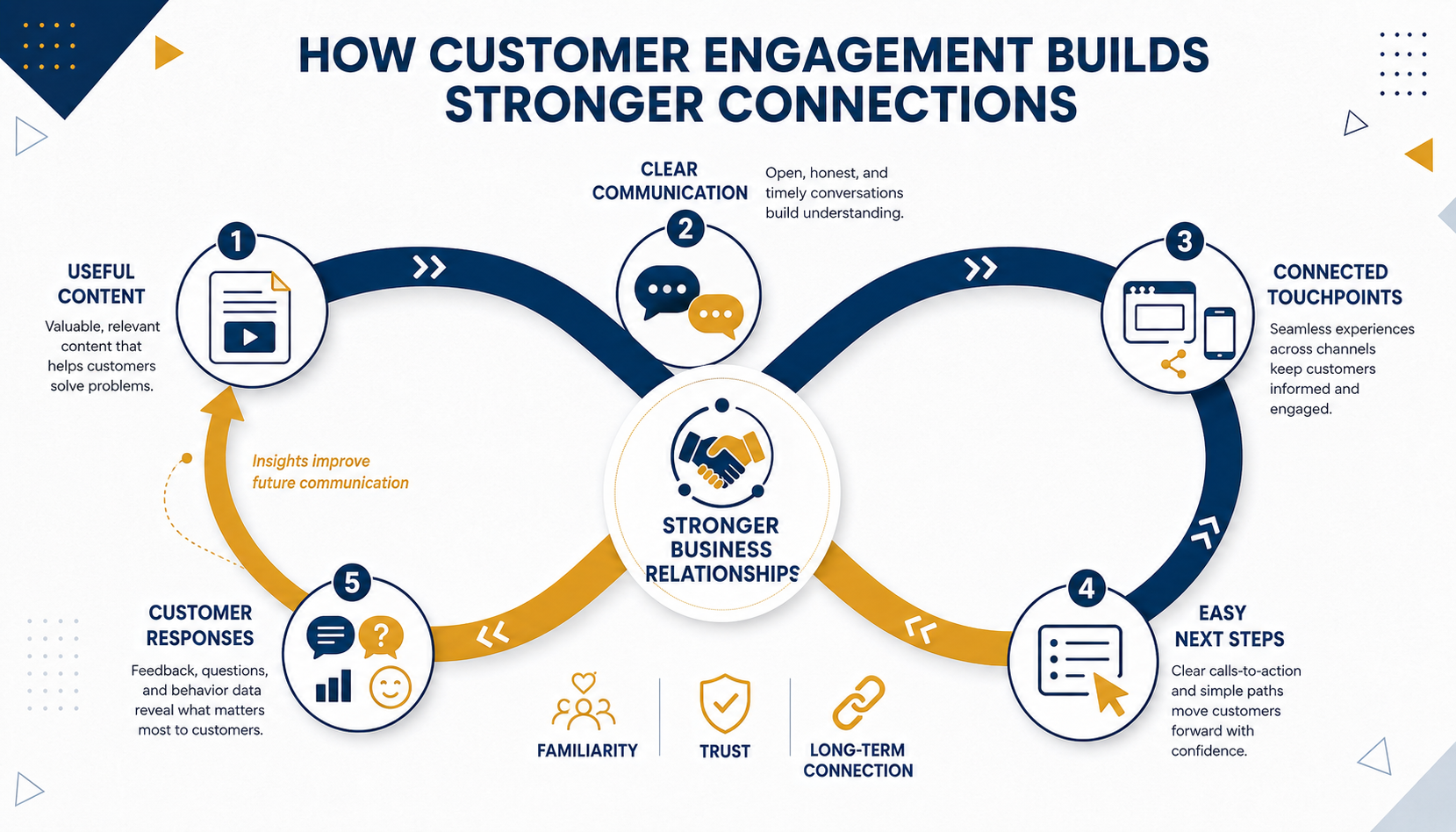
Engagement Should Guide the Next Step
Not every interaction needs to lead directly to a sale. Some customers may still be researching, comparing options, or learning more about a particular service.
A strong customer engagement strategy gives people a clear path to continue. This may include reading more information, exploring a service, sending an inquiry, requesting a quotation, or contacting the business. Good digital engagement supports this progression by making the next step easy to understand.
Customer Responses Can Improve Future Marketing
Engagement provides useful information about what customers are interested in. Comments, questions, inquiries, website activity, and campaign performance can all help businesses understand which topics and services are receiving the most attention.
These insights can improve future customer communication and content planning. Repeated questions may point to information that needs to be explained more clearly, while strong interest in a particular service may show where additional marketing support is needed.
How ANT Builds Better Customer Engagement
At Archipelago Network Technology Inc. (ANT), customer engagement strategy is connected to the wider brand and marketing direction. Content, social media, digital campaigns, brand materials, and online experiences are planned to support clear and meaningful communication with the audience.
Archipelago Network Technology Inc. (ANT) also looks at what happens after people interact with a campaign or piece of content. Engagement levels, website activity, inquiries, and other performance signals can help identify which approaches are working and where improvements can support stronger digital engagement.
Strong Engagement Builds Stronger Connections
Customer engagement helps businesses remain visible while also creating opportunities to build familiarity and trust. Over time, clear communication and consistent interactions can make the brand easier to remember and more relevant when a customer is ready to make a decision.
A focused customer engagement strategy supports this process by giving customers useful information, a consistent experience, and clear ways to continue the conversation. When engagement is planned well, it becomes more than a marketing metric—it becomes part of building stronger business relationships.