
Marketing activities can expand gradually as a business grows. New social media channels are added, advertisements are launched, website pages are created, and different campaigns are introduced over time. Eventually, it can become difficult to see which activities still support the company’s current goals.
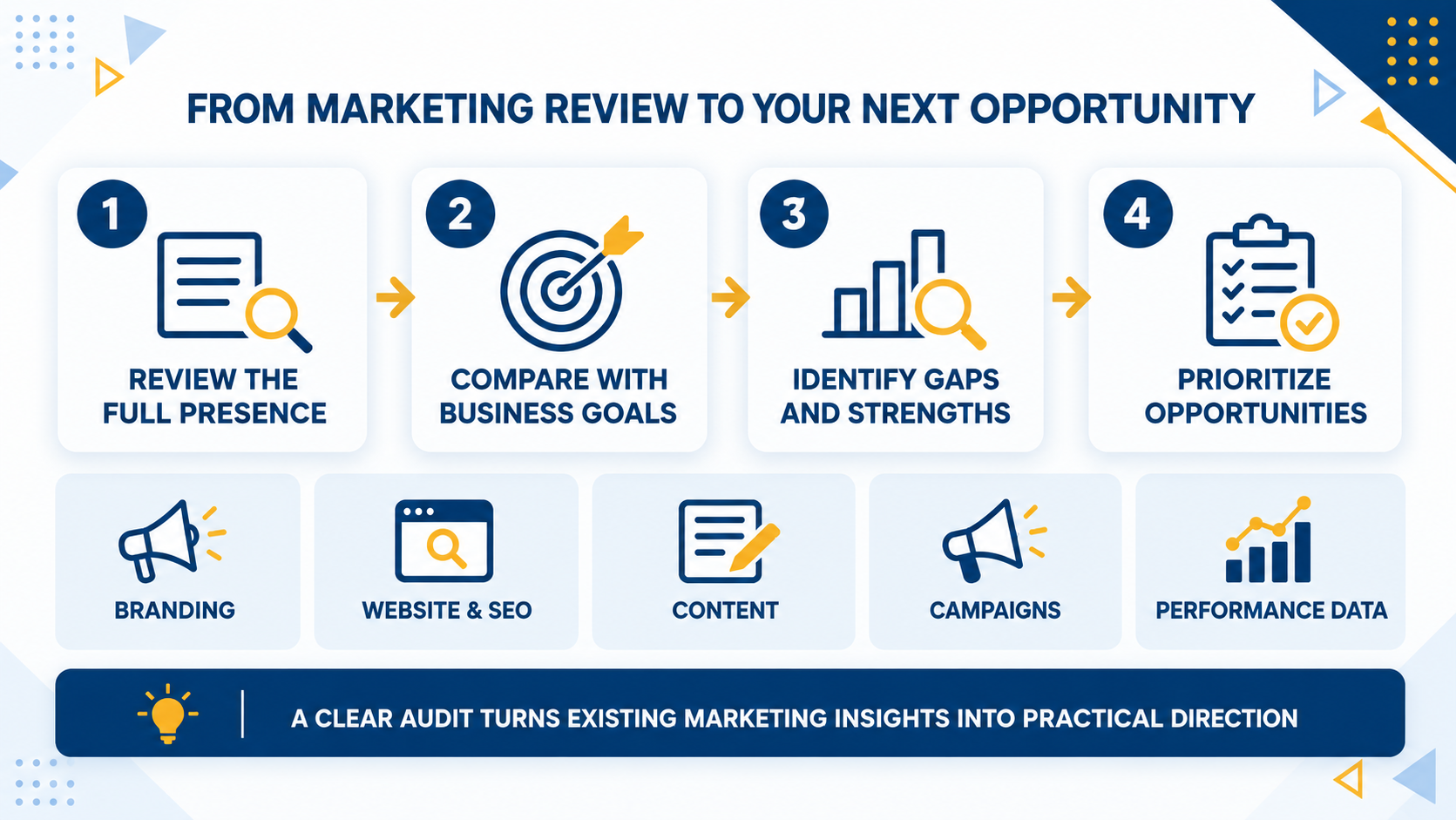
A marketing audit provides a structured way to review the overall marketing presence. By looking at branding, digital channels, content, campaigns, customer touchpoints, and performance, businesses can identify marketing opportunities and determine where improvements can create greater value.
A Wider Review Provides Better Marketing Context
Individual reports can explain how a specific campaign or channel is performing, but they may not show how well the entire marketing approach works together.
A marketing audit looks across different activities to create a broader picture. Website content, social media, SEO, advertising, branding, lead generation, and customer communication can be reviewed together to understand where the business is performing well and where additional attention may be useful.
Business Goals Provide the Right Reference Point
Marketing activities should be evaluated according to what the company is trying to accomplish. A business focused on awareness may require different priorities from one focused on lead generation, market expansion, or customer retention.
Connecting the review with current marketing objectives helps businesses determine whether existing activities still serve the right purpose. This keeps recommendations relevant to the company rather than relying on general marketing practices alone.
Customer Touchpoints Show the Brand From an Outside Perspective
A marketing review can also consider how customers experience the business. Website navigation, service descriptions, social media content, advertisements, inquiry options, and other touchpoints influence how easily people can understand and engage with the company.
Reviewing these areas as part of a digital marketing audit can reveal opportunities to create a more connected customer experience. Even small improvements in communication or accessibility can make marketing easier for customers to follow.
Existing Marketing Assets May Offer New Opportunities
Businesses often already have useful marketing materials that can be improved or used more effectively. Website articles, customer testimonials, completed projects, presentations, videos, photographs, and previous campaigns may still have value.
A marketing audit can identify these existing resources and determine where they can support new marketing opportunities. Updating or adapting strong materials can sometimes provide more value than continually creating everything from the beginning.
Performance Data Adds Evidence to the Review
Marketing decisions become more useful when they are supported by performance information. Website activity, search visibility, engagement, inquiries, advertising results, and conversions can provide important context.
A structured marketing performance review helps businesses identify patterns across these results. The objective is not only to collect numbers but to understand what they suggest about customer behavior and future marketing priorities.
ANT Turns Marketing Reviews Into Practical Direction
At Archipelago Network Technology Inc. (ANT), a marketing review can examine how branding, digital marketing, content, campaigns, customer touchpoints, and performance work together.
Archipelago Network Technology Inc. (ANT) can use insights from a marketing audit to identify practical priorities across branding, social media, SEO, paid advertising, lead generation, brand activation, and business intelligence. This gives businesses a clearer basis for deciding which marketing activities to maintain, refine, or develop further.
Regular Reviews Keep Marketing Aligned With the Business
Marketing does not remain static because businesses, customers, and markets continue to change. Periodic reviews provide an opportunity to make sure marketing activities continue to reflect current priorities.
A structured marketing audit helps businesses understand their existing position before deciding what should come next. By connecting marketing objectives, customer experience, existing assets, and performance insights, companies can identify opportunities that support a more focused and effective marketing direction.