
Appearing prominently in search results can increase website traffic, but the value of that visibility depends on whether the visitors are relevant to the business.
A focused search intent SEO approach looks beyond search volume and keyword rankings. It considers why people are searching, what information they expect to find, and whether the page matches that need. When businesses align content with search intent, SEO has a better chance of attracting visitors who are genuinely interested in their products, services, or expertise.
Search Behavior Reveals What People Need
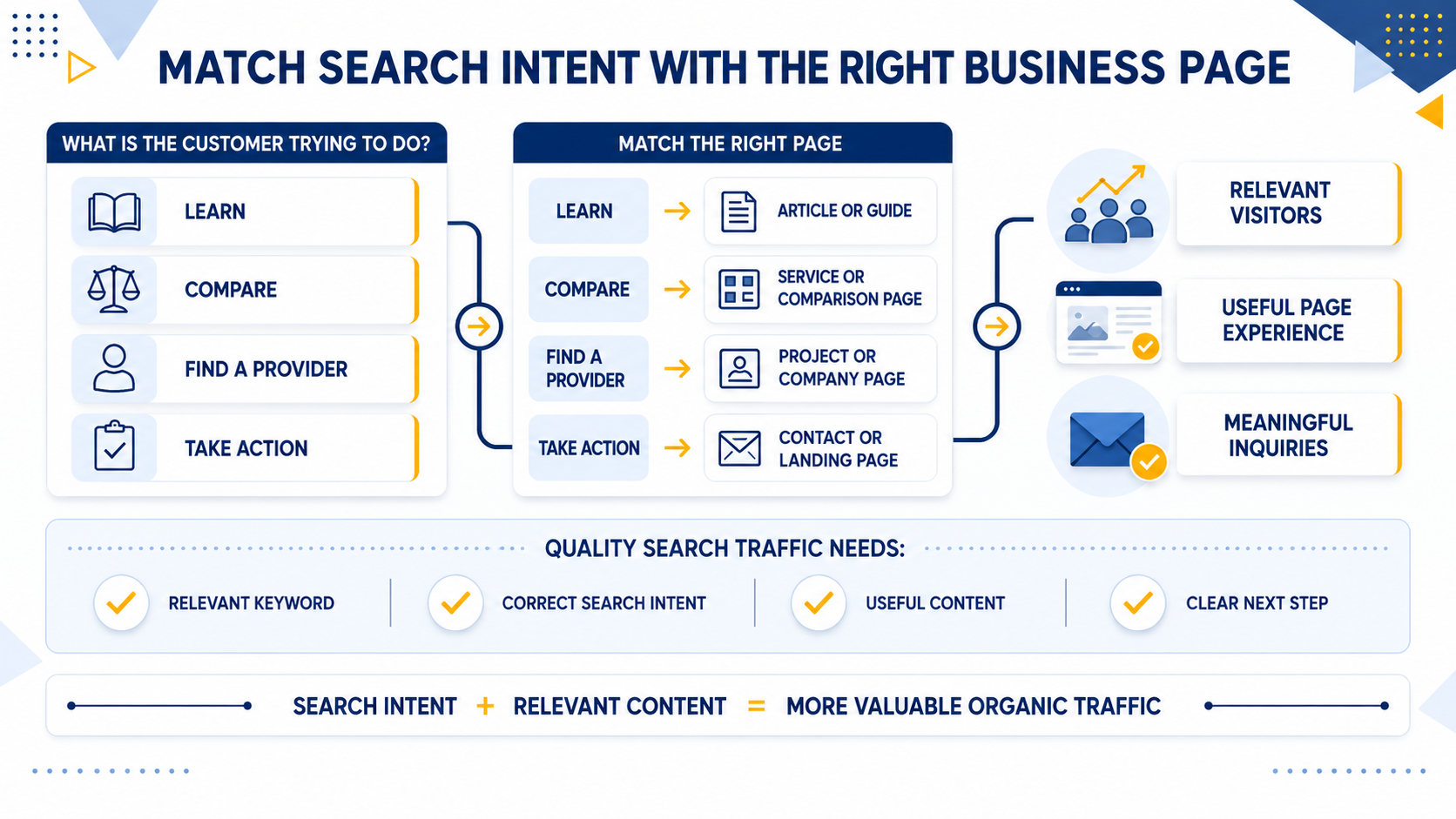
People use search engines for different reasons. Some are looking for information, while others may be comparing services, researching providers, or preparing to make an inquiry.
Recognizing these differences helps businesses decide what type of page should appear for each search. An educational query may be better suited to an article, while a service-related search may require a detailed service page with relevant information and a clear next step.
Keyword Relevance Matters Alongside Search Volume
Popular keywords can create visibility, but search demand alone does not determine whether a keyword is useful for a particular business. Broad terms may attract large audiences without bringing people who are interested in the company’s actual services.
A practical SEO keyword strategy considers relevance, customer needs, and business priorities together with search volume. More specific terms can sometimes bring fewer visitors but create stronger opportunities because the search is more closely connected to what the company provides.
Content Should Reflect the Purpose Behind the Search
A useful search result should match what the visitor expected to find. Informational searches usually require helpful explanations, while service-focused searches should provide details about capabilities, benefits, experience, and available next steps.
Effective SEO content connects the page with the purpose behind the keyword. When the information matches the search more closely, visitors have a stronger reason to stay, continue exploring, and learn more about the business.
Search Keywords Can Serve Different Customer Stages
Potential customers may search differently depending on where they are in the decision process. Early searches may focus on understanding a problem, while later searches may involve comparing solutions or looking for a specific provider.
An effective SEO keyword strategy can address these different stages. Educational content can answer early questions, while service pages and other business-focused content can serve customers who are closer to making a decision.
Visitor Activity Adds Context to SEO Performance
Increasing organic search traffic is useful, but traffic numbers become more meaningful when businesses also understand what visitors do after arriving.
Page engagement, navigation patterns, inquiries, and conversions can help show whether search visibility is reaching a relevant audience. Reviewing these signals allows businesses to refine keywords and content based on the quality of the traffic rather than focusing only on total visits.
ANT Connects Search Intent With Business Priorities
At Archipelago Network Technology Inc. (ANT), SEO can begin with understanding what potential customers search for and how those searches relate to the services a business provides.
Archipelago Network Technology Inc. (ANT) can connect search intent SEO with keyword research, SEO content, website optimization, and performance tracking. This creates a more focused approach to developing organic search traffic around topics that are relevant to both the audience and the business.
Meaningful Rankings Support Better Marketing Outcomes
Search visibility becomes more valuable when the right audience reaches information that matches what they need. Rankings are important, but relevance gives those rankings greater business value.
By aligning search intent, keywords, and content, businesses can create a more purposeful SEO presence. The result is not simply greater visibility, but stronger opportunities to connect with people who are already searching for relevant information, services, or solutions.