
Marketing can create awareness, explain a service, and encourage potential customers to spend more time learning about a business. Once that interest is established, the next step should be easy to recognize.
A practical call to action strategy gives customers a clear path forward. Depending on the situation, that may involve exploring another page, requesting information, asking for a quotation, or contacting the company. When these actions are placed naturally within the customer journey, marketing can move more smoothly from interest to engagement.
Each Marketing Activity Can Lead Somewhere Relevant
Different types of marketing serve different purposes. An educational article may encourage readers to explore a related service, while a campaign focused on a specific offer may direct them toward an inquiry or quotation request.
An effective marketing CTA should match the purpose of the content around it. Defining the intended next step before publishing helps businesses create a more connected experience instead of treating every post, article, or campaign as an isolated activity.
Customer Readiness Can Shape the Next Action
Potential customers may be at different stages when they encounter a business. Some may still be gathering information, while others may already be comparing providers or preparing to make contact.
A thoughtful call to action strategy considers these differences. Early-stage customers can be guided toward useful information, service pages, or project examples, while customers showing greater interest can be given direct options to inquire, request pricing, or speak with the company.
Specific Calls to Action Set Better Expectations
CTA wording becomes more useful when customers understand what will happen next. General phrases can still have a place, but more specific language often provides better direction.
A marketing CTA such as “View Our Services,” “Explore Our Projects,” “Request a Quotation,” or “Talk to Our Team” gives customers a clearer sense of the action they are taking. The wording should match both the content and the experience that follows.
Convenient Access Makes Customer Action Easier
Customers are more likely to continue when important actions are available at the right point in their journey. Contact details, inquiry forms, service links, and quotation options should be easy to locate without interrupting the overall experience.
A practical conversion strategy places these opportunities where they are most relevant. Service pages can include inquiry options, campaigns can lead to appropriate landing pages, and useful content can guide readers toward related services or information.
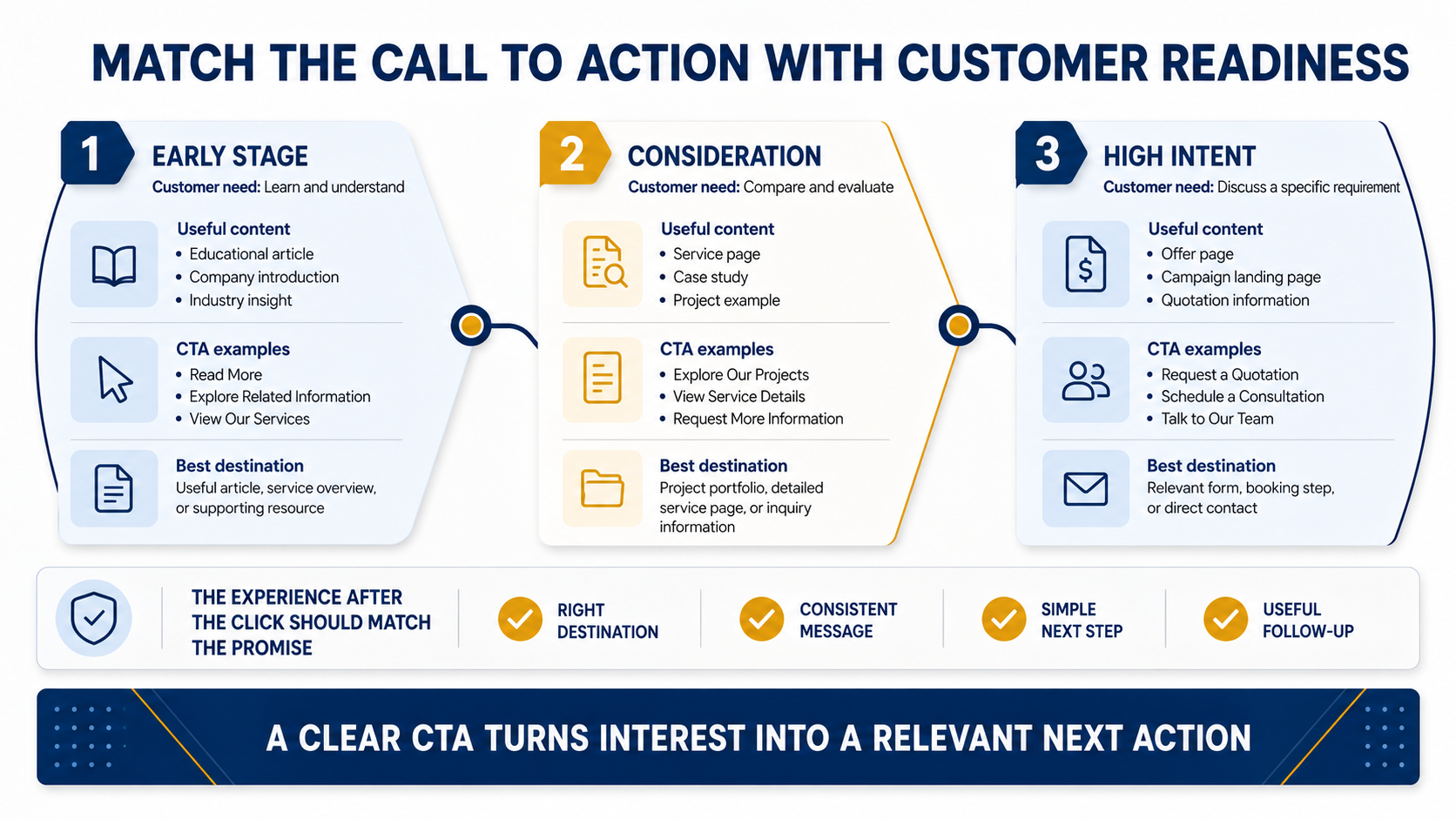
The Experience After the CTA Should Stay Consistent
A CTA creates an expectation about what comes next. If a quotation button leads to a simple and relevant inquiry process, or a service link provides the information customers expect, the journey feels more connected.
Effective lead conversion therefore includes more than the initial click. Landing pages, forms, follow-up communication, and supporting information should continue the same message and make it easy for interested customers to progress.
ANT Connects Customer Actions With the Wider Marketing Journey
At Archipelago Network Technology Inc. (ANT), calls to action are considered part of the wider customer experience. Websites, content, social media, paid campaigns, and other digital touchpoints can work together to help customers understand both the business and the options available to them.
Archipelago Network Technology Inc. (ANT) can connect a call to action strategy with website structure, content, digital campaigns, and performance tracking. Reviewing customer activity can also help identify which pathways are contributing to stronger lead conversion and where the experience can be refined.
A Defined Next Step Helps Turn Interest Into Engagement
Customer interest becomes more valuable when there is a relevant and convenient way to continue. The next action does not always need to be a direct sale or inquiry; it simply needs to fit where the customer is in the decision process.
A focused call to action strategy helps connect awareness, information, and customer action. When each step is easy to understand and consistent with the surrounding marketing, businesses can create a smoother path from initial interest toward meaningful engagement.