
Businesses have access to many marketing channels, including social media, SEO, paid advertising, email, websites, videos, and other digital platforms. Each can create opportunities, but their value depends on how well they support the goals of the business.
A strong digital marketing strategy provides that direction. It helps businesses decide which activities deserve attention, what each channel should accomplish, and how marketing resources can be used more effectively. At Archipelago Network Technology Inc. (ANT), strategy begins with understanding the business before choosing the tools or platforms that will support it.
Business Goals Give Marketing Clear Direction
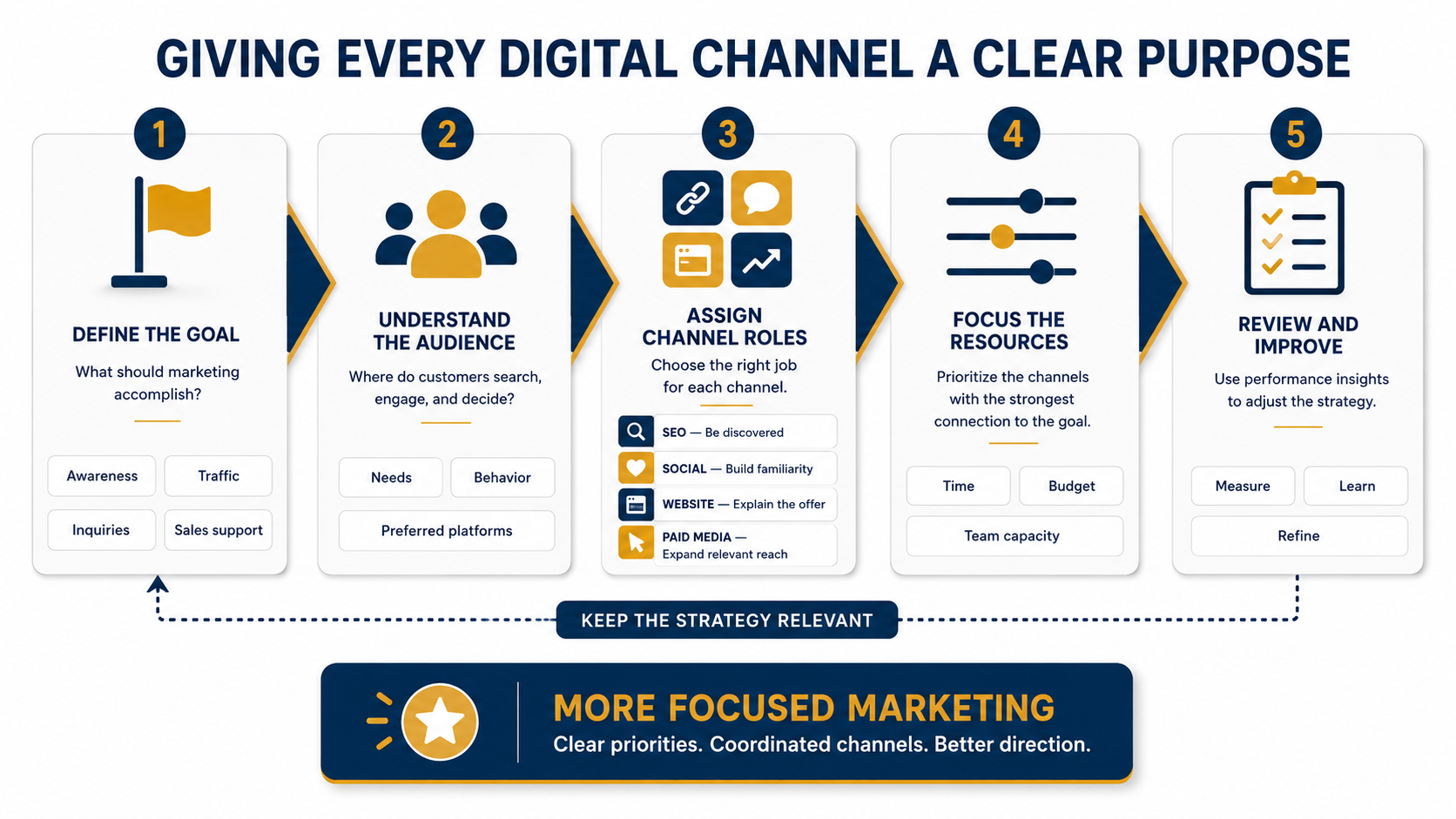
Marketing channels are more useful when they are connected to a specific objective. A company focused on generating qualified inquiries may need a different approach from one introducing a new service or entering a new market.
The business goal gives the digital marketing strategy a clear starting point. Whether the priority is awareness, lead generation, website traffic, service promotion, or sales support, each marketing activity can then be selected based on how well it contributes to that result.
Understanding the Audience Shapes Better Decisions
A useful marketing strategy for business should reflect the people the company wants to reach. Customer needs, search behavior, preferred platforms, common questions, and decision-making habits can all influence the direction of the strategy.
This understanding affects content, advertising, website messaging, and channel selection. When marketing is built around a clearly defined audience, communication becomes more relevant and resources can be focused on the areas most likely to create meaningful engagement.
Every Channel Should Have a Clear Role
Different marketing channels support different stages of the customer journey. SEO can help customers discover a business through search, while social media can strengthen visibility and familiarity over time.
Paid advertising can support specific campaigns or expand reach, while a website provides the information customers may need before making contact. A clear digital marketing plan connects these channels so they work together rather than operating as separate activities.
Focus Helps Marketing Resources Work More Effectively
Not every business needs to maintain the same platforms or use every available marketing format. The right mix depends on the audience, industry, goals, budget, and available resources.
A focused online marketing strategy helps businesses prioritize the channels that are most relevant to their market. This creates a more manageable approach and allows teams to spend more time improving the activities that have the strongest connection to business goals.
Performance Insights Keep the Strategy Relevant
A marketing strategy should provide structure while still allowing room for improvement. Customer behavior, market conditions, campaign results, and business priorities can change over time.
Regular performance reviews help businesses understand whether the current approach is still supporting the intended goals. Strong-performing channels can receive more attention, while other activities can be adjusted based on actual results. This keeps the digital marketing strategy practical and responsive.
How ANT Develops Digital Marketing Strategy
At Archipelago Network Technology Inc. (ANT), digital marketing planning begins with understanding the company’s goals, audience, current brand presence, competitive environment, and growth priorities.
Archipelago Network Technology Inc. (ANT) can then connect branding, SEO, content, paid campaigns, social media, customer engagement, and performance measurement into a coordinated digital marketing plan. Giving each activity a clear purpose creates a more organized approach and makes results easier to evaluate.
A Focused Strategy Creates Stronger Marketing Direction
Businesses do not need to use every available digital channel to build an effective presence. What matters is choosing the channels and activities that best support the audience and the goals of the company.
A well-developed digital marketing strategy creates this focus. It helps businesses determine where to invest, what to communicate, and how different marketing activities can work together. With clearer priorities, marketing becomes easier to manage and better positioned to support long-term business growth.