
Many businesses operate in markets where several companies offer similar services and speak to similar customers. In these situations, clear communication becomes especially important because customers need an easy way to understand what makes one company different from another.
A strong market positioning strategy helps define that difference. Business differentiation does not always require a completely unique product or service. It can come from the audience a company serves, the way it solves problems, the experience it provides, or the strengths it consistently brings to customers.
Positioning Begins With a Clear Business Identity
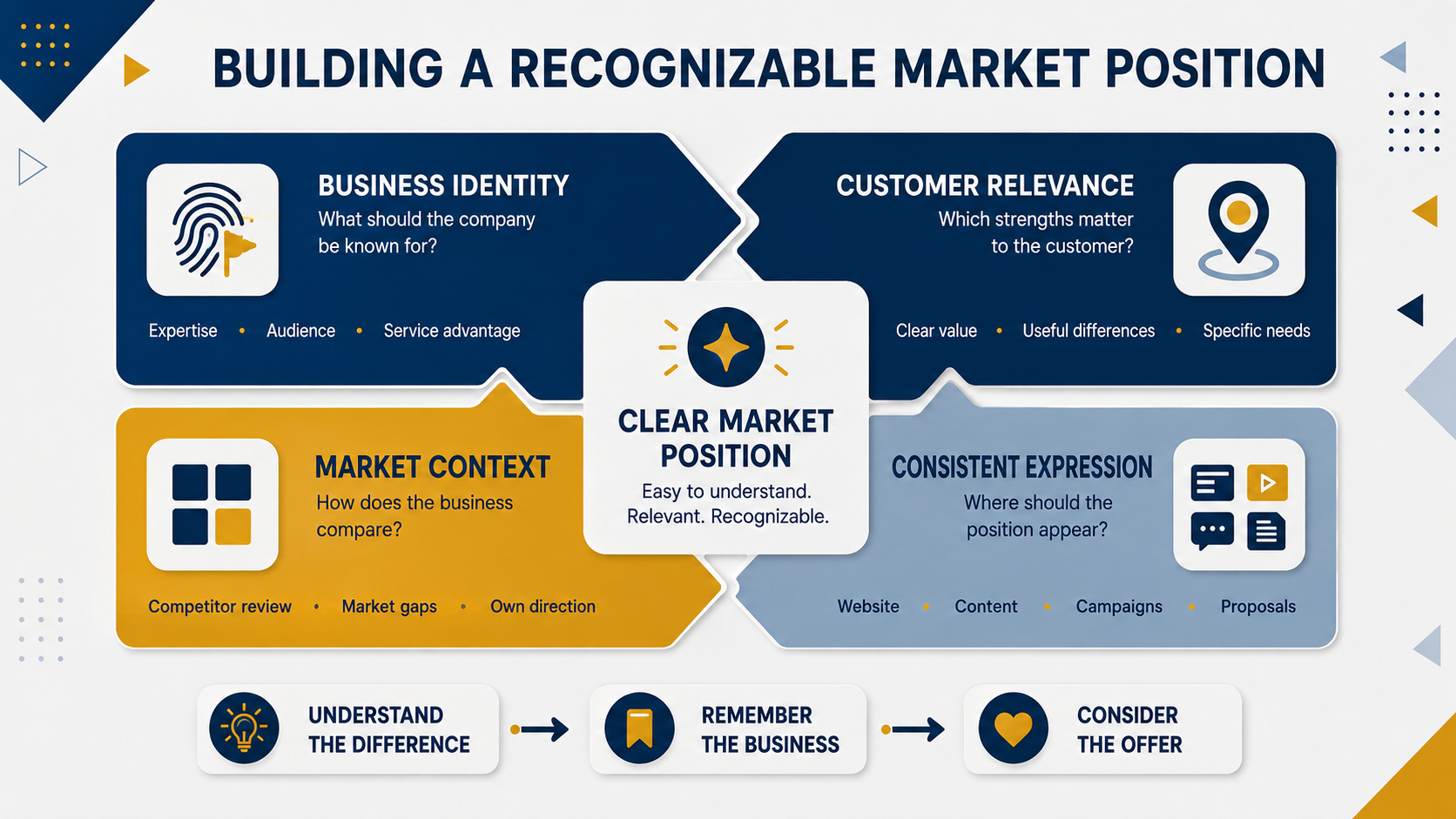
Strong brand positioning starts with knowing what the company wants to be known for. This may be a particular area of expertise, a specific customer segment, a service advantage, or a distinct way of working.
When that focus is clear, it becomes easier to communicate the business consistently. A well-defined market positioning strategy helps customers understand what the company represents and where it fits within the wider market.
Meaningful Differences Should Be Easy to Understand
Effective business differentiation should be clear and relevant to customers. Broad claims or complicated language can make it more difficult for people to understand what actually sets the company apart.
Practical examples are often more useful. A business may be known for responsive service, specialized expertise, integrated solutions, faster delivery, or a more personalized approach. Explaining these strengths clearly helps customers understand the value behind them.
Competitive Analysis Provides Useful Market Context
Competitive analysis can help businesses understand how other companies in the same market present their services, strengths, and value. This creates useful context for evaluating where the company currently stands.
The purpose is not to copy competitors, but to identify opportunities for stronger competitive positioning. Understanding what others emphasize can help a business decide which strengths deserve more attention in its own marketing.
Positioning Should Be Consistent Across Every Channel
A company’s brand positioning should be visible across its website, social media, presentations, advertisements, proposals, and other customer-facing materials.
Consistency helps reinforce what the business wants to be known for. When each touchpoint supports the same overall message, customers can form a clearer and more recognizable impression of the company over time.
Clear Positioning Gives Marketing Better Direction
A defined market position can make marketing decisions easier. Content topics, campaigns, service messaging, and brand materials can all be developed around a clearer understanding of the audience and the company’s strengths.
Strong competitive positioning also helps businesses create marketing that reflects their own direction instead of simply following what others in the market are doing. This gives each activity a more focused purpose.
How ANT Strengthens Market Positioning
At Archipelago Network Technology Inc. (ANT), market positioning strategy begins with understanding the business, its audience, its strengths, and the competitive environment around it.
Archipelago Network Technology Inc. (ANT) can help clarify brand positioning, strengthen business differentiation, and connect that direction across branding, content, digital marketing, and customer communication. The goal is to make the company easier to understand and more recognizable within its market.
Strong Positioning Supports Better Customer Decisions
Customers often compare several businesses before making a decision. Clear positioning helps make those comparisons easier by showing what the company does well and why its approach may be relevant to a particular need.
A consistent market positioning strategy gives customers clearer reasons to remember and consider the business. When the company’s strengths are communicated well, marketing becomes more focused and the brand becomes easier to distinguish in a competitive market.